


In a world drowning in waste, some see a crisis, while others see a “miracle.” That is literally the meaning behind Kiseki, the glass recycling company founded in 2023 by Engineer James Mwendwa. After 15 years in the waste management sector, James launched Kiseki Limited with a clear mission: to transform discarded glass into valuable products, proving that waste can indeed be a resource.
The Kiseki Operation: A Dual Approach
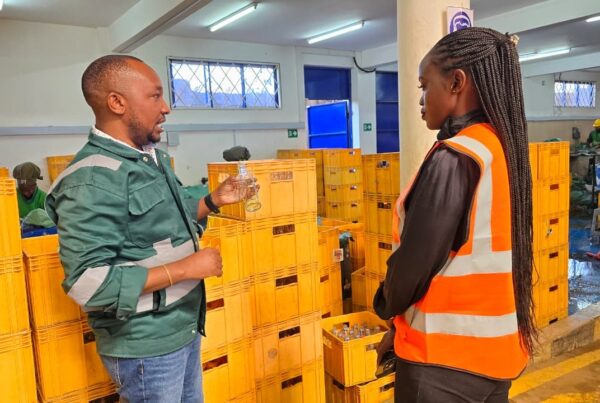
Kiseki’s operations are robust, sourcing glass from two collection centers in Nairobi and seven others outside the county. Once collected, every bottle undergoes rigorous quality checks for size, brand, and foreign substances before hitting the warehouse floor.
The magic happens on two main production lines:
- The Glass Cleaning Line: This manual process ensures the creation of “green jobs.” Here, 250 ml bottles are thoroughly cleaned and sold back to beverage manufacturers for reuse.
- The Glass Conversion Line: Larger bottles (750 ml and above) find a second life as upcycled premium goods—glassware, vases, chandeliers, and shot glasses. Even broken bottles don’t go to waste; they are crushed and sent to partners to be melted down into new glass products.
Scaling Up Against the Odds
James started as a one-man army, but Kiseki has since exploded into a workforce of 150 staff members. These employees are the backbone of the company, handling everything from collection and sorting to washing and upcycling.
However, the journey hasn’t been without its hurdles. James had to rely on personal investment as banks were hesitant to fund the venture. He also faced significant operational challenges, including a shortage of experienced glass cutters, the high cost of machinery, and the persistent stigma associated with waste work. Additionally, the company has had to battle market counterfeiting, where competitors buy bottles at premium prices to undercut legitimate recycling efforts.
Transforming Lives and Future Vision
Despite the business metrics, James considers the human impact his greatest achievement. He cites the powerful story of a former dumpsite worker who is now a supervisor at Kiseki, earning enough to send her children to school. It is this transformation of lives that drives the company forward.
Looking ahead, Kiseki has ambitious plans. They aim to begin manufacturing their own glass bottles for the beverage and pharmaceutical industries. Furthermore, they want to entrench themselves in local communities, encouraging households to sort waste at the source and turning what was once trash into a financial opportunity for everyone.